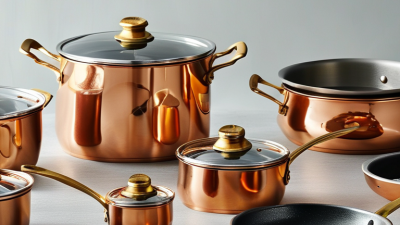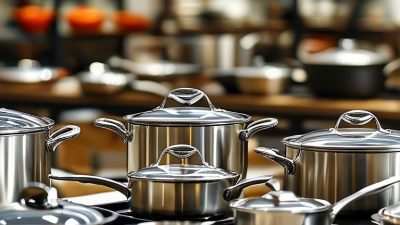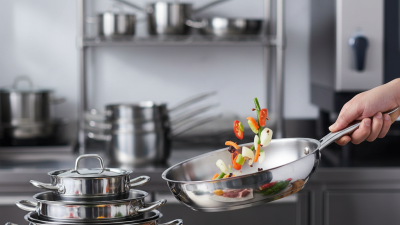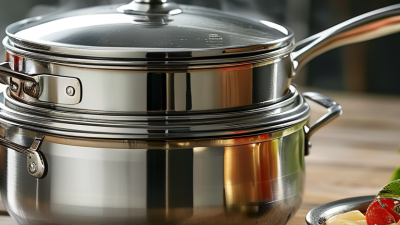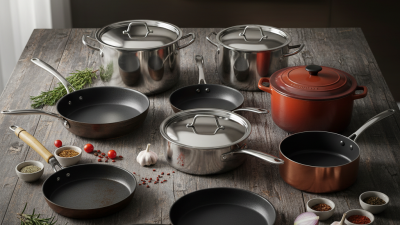
Picking out the right Cookware Kitchen Setisn’t just about grabbing every pan you see. Honestly, it’s more about finding stuff that actually fits your cooking style and what you do every day. For example, a big family might find they need a sturdy 10-inch skillet, a two-quart saucepan, and maybe a large stockpot. But if you’re living in a tiny apartment, you probably don’t need to go overboard—less is often more. More pieces aren’t always better, after all.
In this guide, I’ll share seven practical tips to help you make a solid, dependable choice. We’ll look at things like what material the cookware is made of, how it distributes heat, how comfy the handles are, whether the lids fit snugly, how easy it is to clean, and whether it works well with your stovetop. For instance, Stainless Steel can be super durable, while coated pans might make cooking delicate stuff easier. Cast iron heats up great and lasts forever, but it’s heavy and needs some care to keep in good shape. These little differences really matter, especially if your stove gets busy.
Pay close attention to the details. Handles should feel balanced, stay tight, and be comfortable to hold—especially if you're spending a good chunk of time at it. Lids should sit securely without wobbling around. And if you’re into induction cooking, a quick magnet test can give you a rough idea, but honestly, checking the manufacturer’s info is way more reliable. Be sure to peek at oven temperature limits, cleaning instructions, warranty info, and any independent reviews or tests you can find.
Honestly, there’s no such thing as a perfect set. A cheaper cookware set may seem like a good deal, but it could fall apart after a few uses. On the flip side, a fancy, high-end set might have some pieces that just sit in the cabinet because they’re too heavy or the lids don’t fit right. I’ve also seen gorgeous-looking pots that were a pain to use because of a heavy pan or poorly fitting lid—small things like these are easy to miss at first glance. That’s why I suggest taking your time, comparing options carefully, having realistic expectations, and choosing based on how you really cook—not just what looks pretty on the packaging.
Define Your Cooking Needs and Kitchen Habits
Before choosing a cookware set, think about what you actually cook during a typical week. Do you simmer soups, fry eggs, or prepare large family meals? A home cook who often makes quick breakfasts may need a dependable frying pan more than several specialty pots. If you cook for one or two people, a large set can take up valuable cabinet space. Be honest about your routine. The meals you hope to make someday may not match the ones you make on Tuesday night.
Tip: List your five most-used dishes. Note the pan or pot each one requires, then compare that list with the pieces in a Steel Kitchen Cookware Set. Check that the handles feel comfortable and the lids fit securely. If you cook on an induction stove, confirm that the cookware is compatible. Tiny details matter when you’re lifting a full pot or cleaning after dinner.
Also consider your habits beyond cooking. Do you wash dishes by hand, or rely on a dishwasher? Is storage tight? A set with many pieces can seem like good value, yet unused pans may crowd your shelves. I once underestimated how often I reached for one small saucepan. That choice wasn’t perfect, but it taught me to prioritize everyday use over an impressive piece count.
| Tip | Cooking Need or Habit | What to Look For | Practical Check |
|---|---|---|---|
| 1. Match the set to your regular meals | You often cook soups, grains, sauces, or one-pan meals. | Choose useful everyday pieces, such as a saucepan, a lidded pot, and a skillet, rather than a large set with pieces you rarely use. | List the pots and pans you reach for most often before comparing set sizes. |
| 2. Consider how many people you cook for | You usually prepare single portions, family meals, or batch-cooked dishes. | Look for pan and pot capacities suited to your usual portions; larger vessels can be useful for batch cooking but take more storage space. | Check the listed diameter and capacity of each piece, not only the total piece count. |
| 3. Check your cooktop type | Your kitchen uses induction, gas, electric, or a ceramic-glass cooktop. | Confirm that the cookware is compatible with your cooktop. Induction requires a magnetic base; compatibility should be stated by the manufacturer. | For induction, check product specifications or test whether a magnet sticks firmly to the base. |
| 4. Choose materials for the way you cook | You prioritize easy food release, browning, or everyday durability. | Nonstick surfaces can simplify delicate foods and cleanup; stainless steel is commonly used for searing and browning; cast iron retains heat well but is heavy. | Compare care instructions, weight, heating guidance, and the type of foods you cook most. |
| 5. Think about oven use | You finish dishes in the oven or move pans from stovetop to oven. | Check the stated oven-safe temperature for each piece, including lids and handles; limits can vary within a set. | Verify the temperature rating in the care guide before using cookware in the oven. |
| 6. Make cleanup fit your routine | You prefer hand-washing, dishwasher use, or low-maintenance cookware. | Follow the maker’s cleaning instructions. Some cookware is labeled dishwasher-safe, while other surfaces or finishes may call for hand-washing. | Check care labels and avoid assuming every piece in a set has the same cleaning requirements. |
| 7. Measure storage and handling comfort | Cabinet space is limited, or you prefer lighter, easier-to-handle pans. | Consider nesting designs, removable or compact handles where applicable, lid storage, and the weight of individual pieces. | Measure your shelves and, if possible, handle a comparable pan before buying. |
Cookware materials change how quickly a pan heats, how evenly it cooks, and how long it holds warmth. ASM International’s materials-property references give approximate thermal conductivity values of 390 W/m·K for copper, 205 for aluminum, and 16 for stainless steel. These figures vary by alloy and construction, but they explain why a copper or aluminum core can spread heat faster than a stainless-steel body alone.
Copper responds quickly when the burner changes, which helps with delicate sauces, but it can develop hot spots if the pan is thin. Aluminum is light and heats rapidly; an anodized surface or bonded stainless layer can make it more practical for everyday cooking. Stainless steel is durable and resists reacting with many foods, yet a bare, thin base may heat unevenly. Cast iron heats more slowly and retains warmth well, useful for browning, but its weight and slower response are not ideal for every cook. That trade-off is easy to underestimate.
Nonstick-coated pans release eggs with little sticking, though their coatings need gentler handling and moderate heat. The best choice depends on the dish, stove, and how much upkeep feels realistic. A search for Difference Between Kitchen Equipment And Kitchen Utensils raises a separate point: pans are cookware, while spatulas are utensils. A useful test is simple: check whether the base sits flat, then notice how evenly a small pool of oil warms. Perfect results are not guaranteed.
The best cookware set should support your everyday recipes, not fill your cabinets with unused pieces. In my kitchen, a medium saucepan handles oatmeal, soup, and reheated sauces. A wide skillet manages eggs, vegetables, and quick chicken dinners. Choose pieces that match your real cooking habits.
Tip 1: List five meals you cook often.
Tip 2: Select cookware that serves more than one purpose.
Tip 3: Check the handles for a firm, comfortable grip.
Material affects both cooking results and daily care. A heavy base usually spreads heat more evenly, reducing burnt rice and unevenly browned vegetables. Stainless steel offers durability, while coated surfaces can simplify delicate foods. No material is perfect.
Tip 4: Compare heat response, weight, and cleaning needs.
Tip 5: Look for secure lids that fit tightly.
Tip 6: Avoid sets with too many specialty pieces.
A small oven-safe pan may be more useful than a deep, rarely used pot.
I also recommend checking practical details before buying. Measure your storage space and confirm each piece fits your stovetop. Test the balance if possible. A pan that feels awkward may become frustrating after ten minutes of stirring.
Tip 7: Choose sizes for your usual portions, not imagined dinner parties.
Check care instructions carefully, especially for high heat or dishwasher use.
My own mistake was buying a large skillet that looked impressive but heated slowly on my smaller burner. Everyday cookware should make ordinary cooking easier.
Before buying a cookware set, match every piece to your stovetop. Induction requires a magnetic base, so test a pan with a refrigerator magnet; if it will not cling, it may not work. A flat, stable bottom also matters on glass-ceramic cooktops. On gas, check that flames stay beneath the pan rather than licking its sides. Small details, but easy to miss.
Compatibility can affect energy use, too. The U.S. Department of Energy’s Energy Saver guidance estimates that induction transfers about 85% of its energy to food, compared with roughly 32% for gas cooking. Those figures describe cooking efficiency, not guaranteed savings in every kitchen. Still, they show why an induction-incompatible set can undermine the point of choosing that cooktop. I find pan-base labels less reassuring than a magnet test.
Check oven limits separately. “Oven-safe” does not mean safe at every temperature: handles, coatings, and lids may have different heat ratings. Look for the maximum temperature on the product details, including any limit for the lid. If the rating is unclear, don’t guess—choose a set with explicit guidance. A glass lid may need more caution than the metal pot beneath it.
Tip: Hold each pan as you would during everyday cooking. A handle should feel secure, stay balanced when the pan is empty, and leave room for your fingers. Check that its attachment has no visible gaps or movement. For Kitchen Items Kitchen Items comparisons, product specifications can help, but your grip matters too. Try lifting a similar-weight pan if possible.
Tip: Check how lids sit on the cookware. A well-fitting lid should rest steadily without rocking, while still being easy to lift safely. Look for a handle that is comfortable to grasp with dry hands. Steam can escape quickly. Keep your face and fingers clear when lifting a hot lid, and follow the maker’s care instructions.
Tip: Weight is a trade-off. Heavier cookware may feel stable, but it can be tiring to lift when full. Very light pieces may be easier to handle, yet feel less steady on your stove. I once underestimated how awkward a full pot could be; that is worth considering before buying a set. Inspect edges and handles for sharp spots, and choose pieces you can move confidently.
Tip 1: Check the cookware’s construction before admiring its appearance. Thick bases usually distribute heat more evenly and resist warping. Hold each pan and notice its weight. A very light pan may dent after repeated use. A very heavy one can become tiring during daily cooking.
Tip 2: Study the maintenance instructions carefully. Some surfaces tolerate metal Kitchen Kitchen Utensils, while others need wood or silicone tools. Look for cookware that can handle your usual washing routine. If handwashing is required, consider whether you will actually do it every night. I once chose a difficult-to-clean pan because it looked elegant. It soon collected burnt oil around the handle.
Tip 3: Test how easily food releases from the cooking surface. Eggs should slide away without aggressive scraping when the pan is properly heated and lightly oiled. Inspect rivets, seams, and lid edges, where grease often hides. Removable handles can simplify storage, but they may trap moisture if poorly designed. Check whether replacement parts and care guidance are clearly available. A set that needs special cleaning products may cost more over time. Also, avoid assuming “dishwasher-safe” means effortless care. High heat and strong detergent can still dull finishes or loosen fittings. Choose durability that matches your habits, not an ideal kitchen routine.
7 Tips for Choosing the Best Cookware Kitchen Set
Balance Set Quality, Budget, and Long-Term Value
A good cookware set should match your real cooking habits, not an imagined kitchen. I once bought a large set and rarely used half of it. That choice was expensive and poorly considered. Start by listing seven essentials: your daily pan, saucepan, stockpot, skillet, lids, storage space, and cleaning routine. Choose durable materials with even heating and comfortable, secure handles. Inspect the lid fit carefully. Small gaps can waste heat and frustrate daily cooking.
Budget for value, not the lowest shelf price. The 2023 U.S. Bureau of Labor Statistics Consumer Expenditure Survey reported average annual food-at-home spending of $5,703 per consumer unit. Frequent cooking makes reliable cookware a practical household investment. Compare expected years of use, replacement costs, and care requirements. A smaller set with strong construction may outperform a cheaper, oversized collection. Look for clear material specifications and documented safety testing. Avoid vague performance claims.
Check whether each piece suits your stovetop and oven. Confirm temperature limits before buying. Handles should stay stable, even when the pan holds water or vegetables. Nonstick surfaces need gentler utensils and careful washing. Stainless surfaces demand better heat control. I still prefer the wrong pan occasionally, because convenience wins. That is worth questioning. Also measure cabinet depth before ordering. The Environmental Protection Agency estimated 66 million tons of food waste across U.S. retail, foodservice, and residential sectors in 2019. Flexible pan sizes can support smaller portions and fewer leftovers.
Material conductivity is one useful quality indicator. Higher conductivity can improve heat responsiveness, while durability, maintenance, compatibility, and total cost should also be considered before buying a complete cookware set.
Approximate thermal conductivity of common cookware metals at room temperature, measured in watts per meter-kelvin (W/m·K). Pan construction and thickness can significantly affect real cooking performance.
List five meals you cook often. Choose pieces that handle several tasks. A saucepan may cook oatmeal, soup, and sauces.
A medium saucepan and wide skillet cover many daily meals. Avoid sets filled with specialty pieces you rarely touch.
A heavy base can spread heat more evenly. Stainless steel is durable, while coated surfaces may help with delicate foods. No material is perfect.
Hold the pan as if stirring dinner. The handle should feel secure, balanced, and comfortable. Your fingers need clear space.
A good lid should sit steadily without rocking. Lift it with dry hands, and keep your face away from escaping steam.
Not always. Heavy pans may feel stable but tiring when full. Very light pans are easier to lift but can feel less steady.
Match sizes to your usual portions, not imagined dinner parties. Measure your storage space and stovetop before buying.
Inspect handles, rims, and attachments for gaps or sharp spots. Choose cookware you can move confidently. Small details matter.
Yes. I once bought an impressive skillet that heated slowly on a small burner. Bigger is not automatically better.
Check high-heat limits and dishwasher guidance. A pan may look convenient, yet require more cleaning than expected. That can become frustrating.
Choosing the best Cookware Kitchen Set starts with understanding your cooking style, daily recipes, and kitchen habits. Consider whether you mainly prepare quick meals, slow-cooked dishes, baked recipes, or family-sized portions, then compare materials such as stainless steel, nonstick surfaces, cast iron, or aluminum based on heat performance, responsiveness, and ease of use. Select pieces that match your everyday needs rather than paying for items that may remain unused. Also confirm that the cookware works with your stovetop and oven, including any temperature or induction requirements.
Practical design is equally important. Look for comfortable, secure handles, well-fitting lids, manageable weight, and features that support safe cooking. Before buying, evaluate durability, cleaning needs, maintenance requirements, and resistance to wear. Finally, compare the set’s quality and included pieces with your budget and expected lifespan. A slightly higher initial cost may offer better long-term value if the cookware performs reliably, remains easy to maintain, and suits your cooking routine for years.