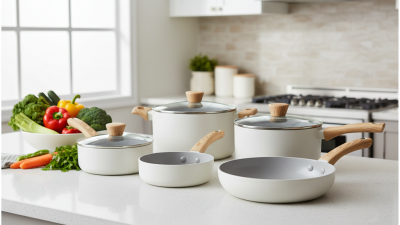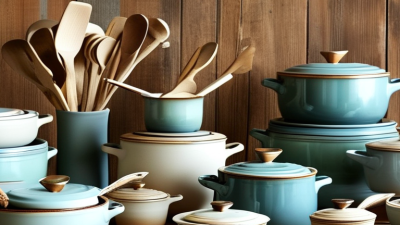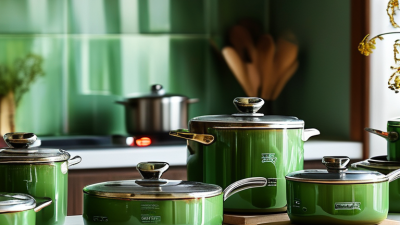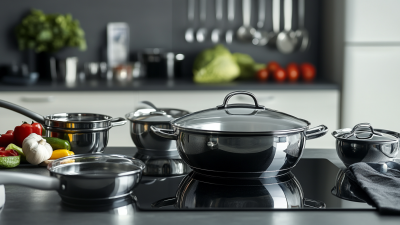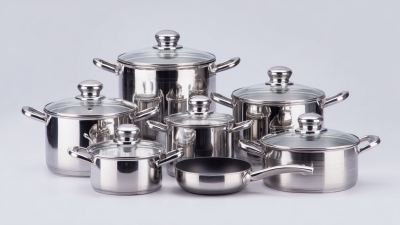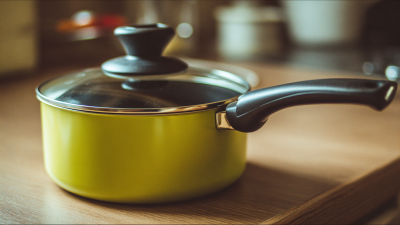
Picking the best ceramic coating cookware suppliers in China isn’t just about scanning prices or glancing at product photos. You really need to dig a bit deeper—check how even the coating is, the quality of the base material, how securely the handles are attached, and how tightly the factory controls their production. Sure, a sample might look flawless under those super bright showroom lights, but it’s worth seeing it again in natural daylight—especially around the edges and rivets—because tiny differences can really add up.
I always say, reliable cookware starts with clear material specs and consistent production checks—that’s more of a guiding principle I follow than a fancy quote from some expert. Honestly, I won’t just toss out some quotation without a proper source. The best approach? Ask your suppliers directly for detailed info on their coatings, how they inspect samples, and their testing records. Also, double-check if the price they give you includes packaging, customization, or export prep because those details can vary a lot from one factory to another.
When you’re evaluating a supplier, it's helpful to consider not just their technical capabilities but also how well they communicate. Can they explain their process clearly? Do they stick to their specifications consistently? Those little things tell you a lot about who you’re dealing with. For example, if you’re trying to develop a green ceramic coating straight body cookware, be specific upfront—talk about the exact shade, size, coating finish, and packaging details before you ask for samples. Missing a detail could mean another round of production delays—and trust me, that happens more often than you’d think.
China’s cookware industry includes a wide range of factories—some with top-notch equipment and others still catching up. No single supplier is perfect for every single order. In the sections ahead, I’ll go over some key points to keep in mind when evaluating suppliers, questions you should ask, and warning signs that might need a closer look. Use these as a starting point, but always verify each claim directly with the supplier—you want to be sure you're making informed choices.
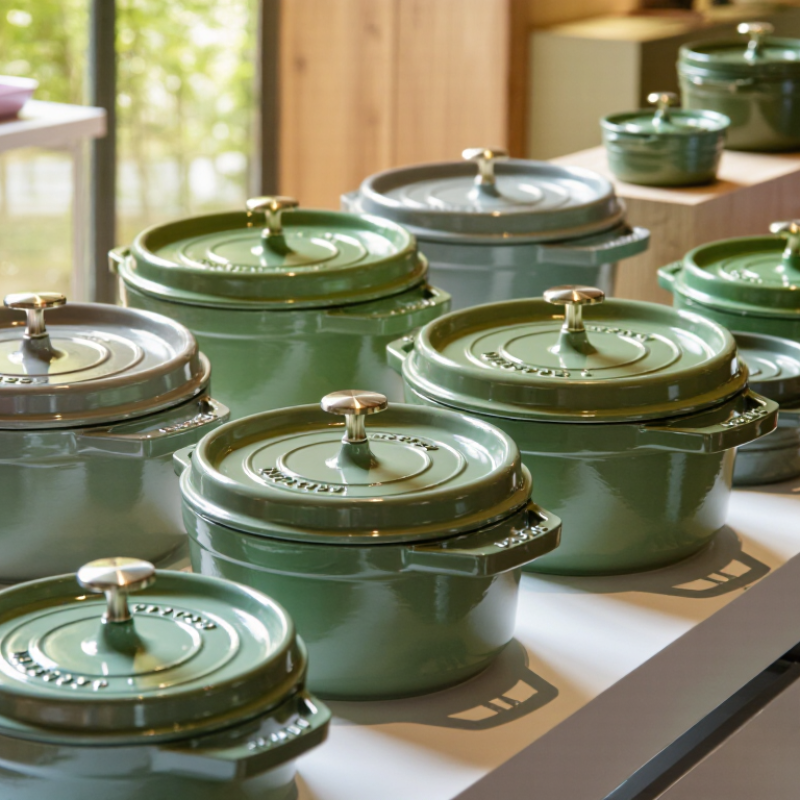
Ceramic-coated cookware usually has an aluminum or stainless-steel body with a thin, silica-based coating. The coating creates a smooth cooking surface and can release food with less oil when it is clean and undamaged. It is not a solid ceramic pot, and its easy-release performance can fade with wear. Gentle heat helps. Sudden temperature changes and metal utensils may shorten the coating’s useful life.
For buyers comparing cookware suppliers in China, ask for clear details about the body material, coating process, thickness, and care instructions. Request samples and check the rim, handle joints, and surface for uneven spots. A black marble coating cookware finish may describe a decorative pattern, not the coating’s composition. Confirm what the supplier means. It is easy to assume appearance tells the whole story, but it does not.
Tips: Use wooden or silicone utensils, let the pan cool before washing, and avoid abrasive pads. Ask suppliers how they test coating adhesion and repeated-use durability. A sample can reveal flaws, but it cannot predict every kitchen’s results.
China’s ceramic-coated cookware production typically starts with an aluminum body, chosen for quick, even heat transfer. Factories stamp or spin the pan, trim its rim, then wash away oil and fine metal dust. The surface is roughened to help the coating grip. Small defects show up later. That matters.
A silica-based sol-gel coating is commonly sprayed in thin layers, then cured in a controlled oven. Exact cure conditions depend on the coating formulation, so suppliers should document oven settings and batch checks. Workers inspect coverage around rivets, rims, and curved walls, where thin spots can be hard to see. Adhesion, abrasion, and thermal-cycle tests help reveal failures before shipment. Not glamorous.
Grand View Research’s Cookware Market report valued the global cookware market at US$27.5 billion in 2023 and projected 6.5% annual growth through 2030. That figure covers cookware overall, not ceramic-coated pans alone. It signals market scale, not process quality. For buyers, useful factory evidence includes coating batch records, substrate thickness checks, and independent food-contact test reports. One awkward truth: a neat sample pan cannot prove every production run is consistent.
A typical production sequence for ceramic-coated cookware
The chart shows the usual order of key manufacturing stages, from forming the cookware body to final inspection. The exact process can vary by cookware material and coating system; the stage numbers indicate sequence, not time or production volume.
A reliable supplier can show how each pan moves from metal forming to coating and final inspection. Ask for written controls covering coating thickness, adhesion, surface defects, and production-batch traceability. Request test reports that identify the tested product and method; a generic certificate proves little about a specific pan. Small details matter. Ask how the factory handles rejected pieces and repeat defects. A polished sample can still mislead.
Supply-chain resilience matters, too. The BCI Supply Chain Resilience Report 2023 found that 76% of surveyed organizations experienced at least one supply-chain disruption in the previous 12 months. This is not cookware-specific, but it underlines why buyers should check backup materials, realistic lead times, and clear delay communication. During an audit, compare the sample’s coating and finish with goods coming off the production line. Differences deserve an explanation.
Tips: Request a small pilot order before scaling up. Check several pans under consistent lighting, and record coating chips, uneven color, and rough rims. Ask for corrective-action records, not just assurances. No supplier is flawless; what matters is whether problems are documented and fixed.
China’s ceramic-coated cookware suppliers serve a market where finish quality and repeatability matter. Grand View Research estimated the global cookware market at USD 25.7 billion in 2023, with projected growth through 2030. Market estimates vary, but the scale makes supplier checks worthwhile. Small details matter. Ask suppliers for coating composition, base-metal thickness, curing records, and batch traceability. Request independent test reports, not just polished samples.
Ceramic coatings are commonly sol-gel based; they are not interchangeable with PTFE coatings. A listing that says “honeycomb etched PTFE coating” describes a PTFE-based surface, not a ceramic one. Clarify the coating type before comparing prices or performance claims. Check adhesion and abrasion test methods, and compare samples from separate production batches. Handles should feel secure, while rims should be smooth and evenly finished. This check is easy to skip—and costly later. Even strong documentation cannot guarantee every production run will match, so retain approved samples and inspect incoming goods.
Best Ceramic Coating Cookware Suppliers in China
Supplier comparisons should start with verifiable production evidence, not catalog photographs. Grand View Research’s Cookware Market Size, Share & Trends Analysis Report estimated the global market at USD 29.8 billion in 2023, with projected growth through 2030. Demand is expanding, but that figure does not prove any factory’s quality. Ask for production capacity, batch traceability, and recent inspection records. Small details matter.
For ceramic-coated pans, request test reports linked to the exact coating and product model. ASTM D3359 can assess coating adhesion; ASTM D4060 measures abrasion resistance under specified conditions. Neither test alone establishes long-term cooking performance. Ask how suppliers test thermal cycling, handle coating defects, and control thickness across production batches. A single bottom marble coating may suit a particular pan design, but request sample pans before approving bulk production. Feel the rim. Check the base for uneven finish.
Certifications need careful comparison. Review the scope and validity of an ISO 9001 certificate, then verify food-contact test documentation for the intended sales market. Reports should identify the tested materials, laboratory, and date. Compare factory audits with actual coating-line capabilities, including surface preparation and curing controls. A polished certificate is useful, but not sufficient. I would still ask for a small pilot order; paperwork can miss inconsistent results between batches.
Supplier-specific claims are not assigned here because no supplier records or test documents were provided. Use the anonymous comparison columns to enter information verified directly from each supplier; request current, product-relevant evidence before making a purchasing decision.
| Comparison dimension | What to compare / evidence to request | Supplier A | Supplier B | Supplier C |
|---|---|---|---|---|
| Product range | Ask which forms are made in-house: Frying Pans, saucepans, stockpots, lids, and sets. Check the current catalog and sample availability. | Not independently verified; enter confirmed range. | Not independently verified; enter confirmed range. | Not independently verified; enter confirmed range. |
| Body material and construction | Record the stated substrate (for example, aluminum or stainleSs Steel), forming method, body thickness, base construction, and compatible cooktops. Verify against a production sample and specification sheet. | Request product-specific specifications. | Request product-specific specifications. | Request product-specific specifications. |
| Ceramic coating system | Request the coating supplier and system description, application process, number of layers, stated coating thickness, cure conditions, and care instructions. Confirm which claims apply to the finished cookware. | Request technical data and sample validation. | Request technical data and sample validation. | Request technical data and sample validation. |
| Food-contact compliance | For the target market, request reports for the exact product or coating system and intended conditions of use. US FDA compliance depends on applicable food-contact requirements; an “FDA certificate” alone is not proof of compliance. | Request applicable test reports and product-scope details. | Request applicable test reports and product-scope details. | Request applicable test reports and product-scope details. |
| EU / German market documentation | For EU sales, assess applicable food-contact requirements, including Regulation (EC) No 1935/2004. LFGB is German food and feed law; ask for relevant test reports rather than treating “LFGB” as a universal product certificate. | Request current reports for the offered model. | Request current reports for the offered model. | Request current reports for the offered model. |
| Quality management | If ISO 9001 is claimed, verify the certificate, validity, issuing body, and scope. ISO 9001 concerns a quality management system; it does not by itself certify cookware food-contact safety. | Request certificate and scope, if claimed. | Request certificate and scope, if claimed. | Request certificate and scope, if claimed. |
| Social-compliance audits | If a BSCI audit is claimed, check the latest audit report, facility identity, date, and result. BSCI is an audit initiative, not a product-safety certification. | Request current audit evidence, if relevant. | Request current audit evidence, if relevant. | Request current audit evidence, if relevant. |
| Performance testing | Request test methods, acceptance criteria, and results for coating adhesion, abrasion or wear, corrosion, thermal cycling, and release performance. Compare results only when methods and test conditions match. | Request reports and test conditions. | Request reports and test conditions. | Request reports and test conditions. |
| Factory capabilities | Confirm which processes are performed at the stated factory, such as forming, surface preparation, coating, assembly, and final inspection. Verify by factory audit or process records. | Confirm in-house and subcontracted steps. | Confirm in-house and subcontracted steps. | Confirm in-house and subcontracted steps. |
| Customization and tooling | Ask about custom dimensions, colors, handles, lids, packaging, tooling ownership, development charges, and sample approval procedures. Record confirmed terms in the quotation. | Confirm options, charges, and ownership terms. | Confirm options, charges, and ownership terms. | Confirm options, charges, and ownership terms. |
| Order and delivery terms | Obtain written MOQ, sample lead time, production lead time, capacity allocation, payment terms, and shipping terms for the specific order. These are supplier- and order-specific, not reliable generic benchmarks. | Enter values from a dated quotation. | Enter values from a dated quotation. | Enter values from a dated quotation. |
Evaluation note: independently confirm legal entity and manufacturing site, match reports and certificates to the offered product and factory, and approve a production-representative sample before placing an order.
Choosing a supplier takes more than comparing catalog photos and prices. Ask where the cookware is made and whether the factory controls coating, forming, and final inspection. Request a recent production sample, not only a showroom piece. Check the rim, handles, lid fit, and coating for uneven spots under bright light. Details matter. Ask for written specifications covering the metal base, coating layers, and recommended use and care. A phrase such as “marble coating stockpot bulk” may help describe a sourcing request, but it does not verify quality.
Verify test reports and confirm that they apply to the exact cookware model and materials you plan to buy. Ask how the supplier checks coating adhesion and abrasion, and how production batches are traced. If possible, arrange an independent factory inspection before a large order. Compare the approved sample with goods pulled from a production run. A perfect sample can hide inconsistencies. Discuss packaging, lead times, minimum order quantities, and how defects are handled; get each point in writing. One limitation: a video tour cannot replace an on-site audit or independent testing. Be cautious if answers are vague, documents lack model details, or the supplier resists reasonable checks.
Ask for written controls covering coating thickness, adhesion, surface defects, and batch traceability. Reports should name the exact product and test method. Generic paperwork proves little.
Check the rim, handles, lid fit, and coating under bright light. Look for chips, uneven color, rough edges, or loose handles. Look closely.
Compare the approved sample with pans taken from a production run. Check finish and coating across several items. Differences deserve an explanation.
Ask for the coating type, composition, base-metal thickness, and curing records. Confirm that documents apply to your exact model. Terms in a product listing are not proof.
Ask how it handles rejected pieces and repeat defects. Request corrective-action records, not just verbal assurances. Problems happen; the response matters.
Ask about backup materials, realistic lead times, and how delays are communicated. Get key commitments in writing. Plans can still change.
No. A video cannot replace an on-site inspection or independent testing. For a large order, consider arranging both.
Put packaging, minimum order quantities, lead times, and defect handling in writing. A small pilot order can reveal issues before production scales up. Samples can mislead.
This guide explains the key features of Ceramic Coating Cookware, including its coated cooking surface, everyday usability, and care requirements. It outlines how ceramic-coated cookware is commonly produced in China, from preparing the cookware body to applying and finishing the coating. It also describes what buyers should look for in a reliable supplier, such as consistent quality control, clear communication, production capacity, and the ability to support different product specifications.
The article compares supplier offerings by considering product range, available certifications, manufacturing capabilities, and quality assurance processes. It also provides practical steps for choosing and verifying a Chinese supplier, including reviewing samples, checking documentation, confirming production details, and discussing packaging and delivery expectations. Together, these points help buyers assess potential partners more confidently and select cookware that fits their intended market and requirements.