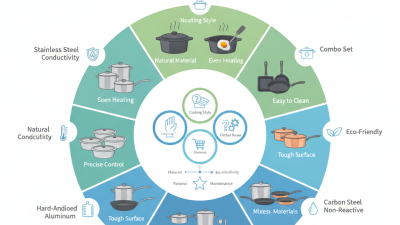
Sourcing from Chaozhou Chaoan Weihua Hardware and Electrical Appliances? It’s not just about comparing factory prices. You’ve also got to dig into materials, production capacity, testing records, and export experience. This guide walks through how to assess Weihua cookware and related hardware appliances using practical sourcing criteria. When you inspect a sample, look at stainless-steel grades, handle strength, weld quality, surface finishing, carton protection, and the actual product weight. Honestly, the small details often reveal the bigger supply risks.
And the industry data backs up that careful approach. Grand View Research put the global small kitchen appliances market at around USD 24 billion in 2023. Their report also predicts steady growth through 2030, driven by urban households, replacement demand, and energy-conscious consumers. Mordor Intelligence points to product innovation, retail expansion, and manufacturing efficiency as major market influences too. These numbers are helpful, sure—but category definitions can differ from one report to the next. That’s a limitation worth keeping in mind.
So reliable sourcing comes down to evidence, not pretty catalog images. Ask for current product specs, factory audit documents, material declarations, and relevant compliance test reports. Make sure you know whether the quoted price includes packaging, labeling, inspections, and shipping terms. Get samples from the same production line that would be used for bulk orders. Pay attention to communication speed, revision control, and corrective-action records. A cheap quote can get expensive fast once defects, delays, or redesigned packaging show up.
Chaozhou Chaoan Weihua Hardware and Electrical Appliances might be a good fit for buyers looking for cookware and household hardware—but supplier fit still has to be verified independently. Compare samples against approved specs. Write down every decision. Even experienced buyers can miss things like coating durability or carton compression strength. A transparent process cuts down uncertainty and supports safer, more consistent procurement.

Before contacting a Chaoan hardware appliance supplier, define the product in measurable terms. Record the appliance type, daily workload, dimensions, finish, and target quantity. State the required voltage, plug format, rated power, and operating temperature. These details prevent vague quotations and unsuitable samples.
Material specifications need equal attention. Identify Stainless Steel grades, surface treatment, handle construction, and resistance to heat, moisture, and corrosion. If your design includes theWeihua marble series, clarify the marble pattern, thickness, edge profile, and acceptable color variation. Natural-looking finishes may differ between batches. That difference needs written tolerance limits. Ask for drawings, sample photos, and a physical sample before approving production. I have seen small measurement errors create costly packaging problems.
Build quality requirements into the purchase file. Request inspection records, safety test results, carton dimensions, spare-part availability, and a clear defect-handling process. Confirm whether the factory can support private labeling, neutral packaging, or small trial orders. A factory visit or live video inspection can reveal storage conditions and assembly practices. Do not rely only on polished catalog images. They can hide weak welding or uneven polishing. My own sourcing reviews sometimes miss minor cosmetic defects, so independent pre-shipment inspection remains valuable. Keep every revision dated and signed.
Chaoan’s hardware manufacturing landscape is shaped by dense supplier networks, practical workshops, and experienced metalworking teams. Many factories serve kitchenware, household hardware, and small appliance component markets. Their capabilities may include stamping, die casting, polishing, welding, assembly, and surface finishing. Production often moves quickly, but quality can vary between workshops. That difference matters.
When sourcing from Chaoan, inspect the factory before discussing large volumes. Ask for process flowcharts, material certificates, inspection records, and recent production samples. Confirm whether critical operations are handled in-house or subcontracted. Check press capacity, mold maintenance, tolerance control, and packaging methods. A clean floor is useful evidence, but it is not proof of consistent quality. Request a pilot order. It may reveal hidden problems.
Tips: Compare at least three qualified suppliers. Measure samples with calibrated tools. Record surface defects under strong light. Clarify acceptable tolerances in writing. Verify product safety requirements for your destination market. Keep payment stages linked to inspection results. Do not rely only on online catalogs.
A reliable sourcing decision should combine factory experience, technical evidence, and transparent communication. Visit during active production when possible. Observe material storage, worker instructions, and final inspection routines. Some suppliers may promise every capability, yet their equipment tells another story. I have found that small details, such as mixed hardware bins or unclear labeling, often predict larger shipment issues. Build time for corrections, because the first specification is rarely perfect.
When sourcing Chaozhou Chaoan hardware appliances, verify Weihua’s legal identity before reviewing prices. Request the Chinese business license, unified social credit code, registered address, and export registration details. Match every document against official government records. A polished certificate file is not enough.
The ISO Survey 2022 recorded 1,265,216 valid ISO 9001 certificates worldwide. This figure shows certification is common, but it does not prove factory capability. Ask for the certificate scope, issuing body, expiry date, and audited production site. Then compare the legal entity on the certificate with the supplier’s license. Small differences matter. I once saw a factory profile use a trading company’s name, while the inspection report named another entity.
For the Weihua matte series, request a current product list, material specifications, coating thickness, salt-spray results, and batch inspection records. Product samples should show consistent texture under direct light. Check screw alignment, edge finishing, packaging protection, and repeated-use performance. Ask whether testing follows relevant IEC appliance safety requirements. The International Energy Agency’s Energy Efficiency 2023 report highlights the growing importance of efficient products and verified performance data. Therefore, request rated power, standby consumption, and test conditions, not vague efficiency claims. Keep signed quotations, sample approvals, and corrective-action records in one file. Leave room for doubt. Supplier websites can become outdated.
| Verification Dimension | What to Verify | Reliable Evidence | Product or Supplier Risk | Recommended Buyer Action |
|---|---|---|---|---|
| Legal registration | Confirm the supplier is legally registered and that its business scope covers hardware, household appliances, metal products, or related manufacturing activities. | Current business license, unified social credit code, registered address, legal representative, and official registration-record search. | Untraceable entity, inconsistent addresses, or a trading company presented as a factory. | Match the legal entity on the quotation, contract, invoice, bank account, and export documents. |
| Factory identity | Determine whether production is performed in-house or outsourced, and identify the location of assembly, machining, testing, and packaging. | Live video audit, factory address, production-flow photographs, equipment list, payroll or capacity records under confidentiality terms. | Limited control over quality, lead time, traceability, and engineering changes. | Use an independent inspection service before placing a large order. |
| Product category fit | Check whether the supplier can produce the required appliance or hardware category, including material, dimensions, finish, function, and installation method. | Technical catalog, drawings, bills of materials, sample photos, material declarations, and comparable production references. | Substitution of materials, dimensional mismatch, poor fit, or non-compliance with the intended application. | Issue a written specification with tolerances, approved materials, surface treatment, and acceptance criteria. |
| Materials and components | Verify grades of stainless steel, aluminum, carbon steel, plastics, electrical parts, fasteners, coatings, and packaging materials. | Mill certificates, supplier declarations, incoming inspection records, restricted-substance declarations, and sample test results. | Corrosion, cracking, discoloration, electrical failure, or regulatory non-compliance. | Approve a golden sample and require written authorization for material substitutions. |
| Manufacturing processes | Assess capabilities such as stamping, bending, welding, die casting, CNC machining, polishing, coating, assembly, and packaging. | Process flow chart, machinery list, tooling records, work instructions, first-article reports, and production samples. | Uneven dimensions, weak joints, visible finishing defects, and unstable repeatability. | Request capability samples representing the most difficult features of the product. |
| Quality management | Review inspection procedures from incoming materials through final shipment, including nonconforming-product control. | Quality manual, inspection plans, calibration records, corrective-action reports, batch records, and internal audit evidence. | Defects discovered only after delivery and weak root-cause response. | Define acceptable quality limits and conduct pre-shipment inspection against the approved sample. |
| Appliance safety | For electrical or gas-related products, verify voltage, frequency, insulation, grounding, temperature, leakage, mechanical safety, and applicable market requirements. | Test reports from competent laboratories, conformity documentation, wiring diagrams, component approvals, and user instructions. | Electric shock, fire, overheating, unsafe operation, customs rejection, or product recall. | Specify the destination market before sampling and verify the exact production model, not only a similar model. |
| Compliance documentation | Confirm that required technical files, labels, declarations, manuals, and chemical or environmental records are available for the destination market. | Country-specific conformity declaration, product label artwork, technical file index, test reports, and restricted-substance documentation. | Delayed clearance, relabeling costs, sales restrictions, or administrative penalties. | Have a qualified compliance professional review documents before mass production. |
| Engineering and customization | Assess design support, tooling development, sample revision control, prototyping, and the ability to maintain approved specifications. | Engineering drawings, revision history, prototype schedule, tooling ownership terms, and documented engineering-change process. | Repeated sampling, uncontrolled changes, tooling disputes, and inconsistent production. | Assign a revision number to every drawing, sample, label, and packaging specification. |
| Capacity and lead time | Evaluate monthly output, peak-season capacity, tooling availability, raw-material access, and realistic production lead time. | Capacity plan, production schedule, order-load summary, standard lead-time sheet, and pilot-order performance. | Missed delivery windows, rushed production, and reduced inspection quality. | Start with a controlled trial order and include delivery milestones in the purchase contract. |
| Packaging and logistics | Confirm export packaging, carton strength, moisture protection, palletization, product marking, and loading procedures. | Packaging specification, drop or transport test results where applicable, packing list, carton dimensions, and loading photographs. | Transit damage, missing parts, incorrect labeling, and higher landed cost. | Approve packaging through a sample shipment before full-scale export. |
| Commercial terms | Compare minimum order quantity, tooling charges, sample fees, payment terms, warranty, spare parts, and delivery terms. | Itemized quotation, pro forma invoice, warranty policy, spare-parts list, and written delivery terms using an agreed Incoterm. | Unexpected charges, unclear liability, cash-flow exposure, and difficult claims. | Ensure the beneficiary name on payment instructions matches the contracted legal entity. |
| Supplier verification score | Use a weighted review covering legal status, factory capability, quality, compliance, delivery, communication, and commercial terms. | Completed audit checklist, document-verification log, sample evaluation, inspection report, and corrective-action closure record. | A low price may conceal documentation gaps, unstable quality, or insufficient production control. | Approve the supplier only after critical findings are closed and the trial order meets agreed acceptance criteria. |
Recommended sourcing sequence: verify legal identity → audit production capability → approve specifications and samples → review market compliance → place a controlled trial order → complete pre-shipment inspection.
When sourcing Chaozhou Chaoan hardware appliances, inspect more than surface appearance. Check the housing, heating elements, switches, wiring, and fasteners. Stainless steel should resist rust after cleaning and moisture exposure. Plastic parts must tolerate heat without warping or releasing strong odors. Ask for material specifications and production samples. Compare the sample with the mass-production unit. Small differences matter.
Compliance needs documented proof. Request applicable test reports, safety declarations, factory quality records, and traceability details. Requirements vary by destination market, voltage, plug type, and appliance category. Do not accept vague claims such as “export quality.” For the Weihua black gold series, examine coating thickness, edge finishing, and heat resistance. A dark finish can hide scratches. It can also reveal fingerprints quickly. Packaging should protect corners, controls, and glass surfaces during transit.
Tips: Use an independent pre-shipment inspection when order value justifies the cost. Photograph product labels, internal wiring, and carton markings. Confirm that test reports match the exact model, not a similar product. Keep signed specifications and approved samples. One overlooked detail can create costly returns. Also, do not rely only on factory assurances. A polished sample may hide inconsistent assembly, and I would treat that as a warning rather than a minor imperfection.
Sourcing hardware appliances from Chaozhou Chaoan works best when your request is precise. Local factories may handle metal fittings, kitchen tools, and household hardware. Describe the product function, target market, and expected annual volume. Send drawings, reference photos, or a marked sample. State materials, dimensions, surface finish, packaging, and testing needs. A physical sample reveals details that drawings often miss. Ask whether the sample uses production-grade materials. This prevents a polished prototype from hiding weak construction.
Request a quotation with separate tooling, sample, unit, packaging, and delivery costs. Ask for the minimum order quantity and price breaks. Confirm the quotation’s currency, validity period, payment terms, and lead time. Freight terms need clear wording. “Delivered” can mean different things. Request a written production schedule with inspection points. An experienced supplier should explain tolerances, material substitutions, and likely production risks. If an answer stays vague, treat it as a warning.
For customized specifications, use a numbered requirement sheet. Include thread sizes, hole positions, load limits, color references, packaging, carton limits, and barcode requirements. Ask for a pre-production sample before approving bulk production. Test fit, corrosion resistance, moving parts, and edge safety yourself. Keep revision records approved by both sides. I once overlooked a two-millimeter clearance issue; the assembly later dragged. Small errors become expensive. Leave room for improvement.
How to Source Chaozhou Chaoan Weihua Hardware Appliances
A reliable contract should describe every product detail. Include the Weihua tri-ply series, steel grade, thickness, dimensions, handle fittings, and packaging method. Attach approved drawings and sample photos. Specify inspection standards, acceptable tolerances, and correction procedures. Payment stages should match production milestones. Lead times need written confirmation, not casual promises. A small mistake here can create expensive delays later.
Shipping arrangements require practical detail. Confirm the delivery term, loading port, carton markings, insurance responsibility, and required documents. Ask for a pre-shipment inspection with dated photos. Check carton strength when appliances contain glass or polished surfaces. Keep a buffer for port congestion and holiday closures. It sounds cautious. It is necessary. My own review process would also verify that invoice descriptions match the physical goods, because this detail is easy to overlook.
Tips: Keep one signed specification file. Request weekly production updates. Record serial numbers and carton counts before loading. After-sales support should include a response time, spare-parts list, and clear evidence requirements for damage claims. Ask how replacement components are packed and shipped. Test the support channel before final payment. Do not assume every issue will be handled smoothly. Written procedures usually protect both sides better than friendly conversations.
Recommended operational targets for contract finalization, shipping coordination, quality documentation, and after-sales support. These are planning benchmarks rather than company-specific performance data.
The target levels help buyers evaluate whether each stage of the sourcing process is ready before payment, shipment release, and post-delivery support.
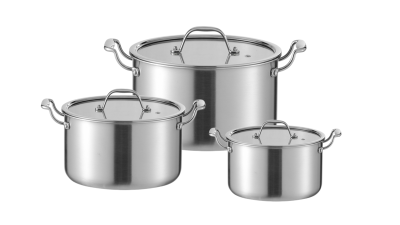
A classic six-piece tri-ply cookware collection brings together practical performance and timeless style for everyday kitchen routines. Its layered construction is designed to distribute heat evenly, helping ingredients cook consistently while reducing hot spots. With a polished appearance and balanced proportions, the cookware can move comfortably from casual weekday meals to carefully prepared dishes for guests.
The 16 × 9.0 cm casserole, with a 1.5-liter capacity, is a convenient choice for warming soup, preparing sauces, cooking grains, or making smaller portions. Its compact size is easy to handle and ideal for kitchens where space matters. For family side dishes, stews, and moderate servings, the 20 × 10.0 cm casserole offers a useful 2.0-liter capacity without feeling oversized.
When preparing larger meals, the 24 × 13.6 cm casserole provides 3.3 liters of room for simmering vegetables, pasta sauces, curries, or one-pot dishes. Together, these three sizes give everyday cooking greater flexibility, allowing you to select the right vessel for each recipe. Even heating supports steady simmering and reliable results, while the coordinated design adds a refined touch to the stovetop.
Check the housing, heating elements, switches, wiring, fasteners, and surface finish. Look closely. Stainless steel should resist rust after cleaning and moisture exposure. Plastic should not warp or produce strong odors when heated.
Request material specifications and production samples. Compare the approved sample with the mass-produced unit. Small differences can reveal inconsistent assembly or weaker materials.
Request applicable test reports, safety declarations, factory quality records, and traceability details. Confirm that each report matches the exact model. “Export quality” is not enough evidence.
Ask for separate tooling, sample, unit, packaging, and delivery costs. Confirm minimum order quantities, price breaks, currency, validity, payment terms, and lead time. Freight wording needs clarity.
Use a numbered requirement sheet. Include dimensions, materials, thread sizes, hole positions, load limits, colors, packaging, and barcode requirements. Attach drawings or marked photographs.
It exposes problems that drawings may miss. Test fit, moving parts, edge safety, and corrosion resistance yourself. A two-millimeter clearance error once caused assembly problems. I should have checked earlier.
Include steel grade, thickness, dimensions, handle fittings, packaging, tolerances, and inspection standards. Attach approved drawings and sample photos. Payment stages should follow production milestones.
Confirm delivery terms, loading ports, carton markings, insurance duties, and required documents. Photograph cartons, labels, internal wiring, and product condition. Request spare-parts information and response times.
It may be worthwhile when the order value is substantial. Inspect carton strength, serial numbers, carton counts, controls, and polished surfaces before loading. Factory assurances alone are not enough.
Sourcing Chaozhou Chaoan Weihua Hardware And Electrical Appliances requires a clear and organized process from planning to delivery. Start by defining your product categories, technical specifications, target quantities, budget, packaging needs, and delivery schedule. Then research the Chaoan hardware manufacturing landscape to understand available suppliers, production strengths, and specialization areas. Before proceeding, verify the selected manufacturer’s company registration, production capacity, export experience, communication standards, and ability to meet your requirements.
A reliable sourcing process should also include careful evaluation of materials, workmanship, product safety, and applicable quality standards. Request samples and detailed quotations to compare performance, pricing, customization options, lead times, and minimum order quantities. Once the products and terms are confirmed, finalize a clear contract covering specifications, inspection procedures, payment milestones, shipping arrangements, warranties, and after-sales support. This structured approach can help reduce purchasing risks and build a more dependable, transparent supply relationship.